
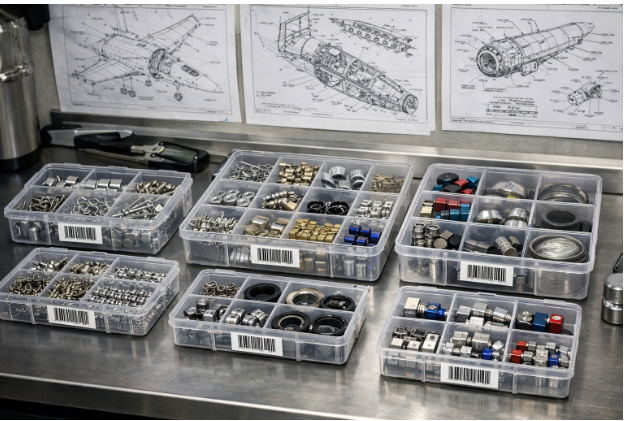

The aerospace industry relies on highly intricate supply chains encompassing an extensive range of components, suppliers, and logistics partners. This complexity can result in various challenges, including inventory mismanagement, production bottlenecks, and costly delays that might threaten project deadlines and reliability standards. Companies striving for operational excellence are increasingly turning to aerospace kitting to overcome these pain points and create smoother workflows across their manufacturing processes.
Aerospace kitting services provide an effective way to consolidate the parts and components needed for specific assemblies or maintenance tasks into organized, clearly labeled kits. By ensuring that the right parts are always available exactly where and when they are needed, kitting services help manufacturers minimize errors, tighten inventory controls, and boost production efficiency.
Effective sound inventory control and part management are essential for aerospace production. By using well-organized kits, teams can prevent time-consuming searches for missing parts and avoid emergency orders. This practice leads to improved project execution and reduced administrative burdens. Embracing aerospace kitting enhances supply chain visibility, minimizes waste, lowers operational costs, and ensures regulatory compliance through careful tracking. As supply chains become increasingly complex, these managed solutions will be even more crucial.
Understanding Aerospace Kitting
Aerospace kitting is the assembly of all necessary materials and components for a specific task or production phase into a single kit. Each kit is meticulously organized based on detailed manufacturing or maintenance requirements, so the intended team receives everything needed at once in pre-counted, properly labeled packages.
The process begins with careful coordination between the manufacturer and kitting provider to determine the precise bill of materials. The provider then gathers, inspects, and organizes parts, often using barcode tracking or RFID tagging for enhanced traceability. Once completed, each kit is stored until needed or delivered directly to the production floor, reducing downtime and maximizing efficiency.
Benefits of Implementing Aerospace Kitting Services
Inventory Management Improvement
By centralizing part management, aerospace kitting significantly reduces the chances of inventory discrepancies and eliminates overstocking. Parts histories and expiration dates are closely monitored, making it easier to comply with stringent industry regulations and quality standards.
Cost Efficiency
The organizational advantage of pre-assembled kits translates to reduced operational costs. Streamlined workflows mean less time spent tracking down components or placing last-minute orders for missing parts. Waste is minimized by including only the required quantities in each kit, thereby virtually eliminating emergency procurement.
Production Efficiency
With all parts ready and correctly labeled, assembly personnel spend more time on high-value activities instead of searching for the right fastener or connector. This accelerates assembly times, mitigates errors, and drastically reduces downtime, especially on complex, multi-stage projects.
Case Study: Aerospace Fasteners Incorporated’s Kitting Services
Aerospace Fasteners Incorporated offers tailored kitting services designed to improve the accuracy, speed, and traceability of component preparation for aerospace projects. Their system integrates robust inventory controls using barcode scanning and QAD system integration, enabling customers to gain real-time visibility into their supply chain.
Quality assurance is embedded in the kitting process. Each kit is triple-checked during assembly to ensure every part matches the requirements. The integration of systematic checks not only eliminates errors but also supports ongoing compliance with industry certifications and customer standards.
Industry Data Supporting the Effectiveness of Kitting Services
Aerospace manufacturers that implement integrated supply chain visibility, such as kitting, can reduce disruption costs by up to 20 percent compared to those that rely on traditional audit processes. Similarly, a recent Unipart study highlights that nearly 69 percent of businesses lack the necessary supply chain visibility to safeguard their operations and brand reputations, reinforcing the urgent need for integrated solutions.
Challenges in Aerospace Supply Chains and How Kitting Addresses Them
Supply Chain Visibility
One of the most prominent challenges in aerospace supply chains is insufficient end-to-end visibility. Fragmented processes and data silos can lead to miscommunication, bottlenecks, and mistakes. Kitting services centralize and track all necessary parts within each kit, providing clear and actionable visibility at every stage of the manufacturing process.
Supplier Coordination
Managing multiple suppliers and the constant flow of small, high-precision parts makes coordination difficult. Aerospace kitting reduces this complexity by aggregating components from various sources, ensuring timely delivery and accuracy, easing logistical pressures, and guaranteeing readiness for every production run.
Implementing Kitting Services: Steps and Considerations
Assessment
Begin with a thorough assessment of your current supply chain to pinpoint inefficiencies and recurring challenges. Evaluate inventory management processes, turnaround times, and error rates to identify areas that would benefit most from kitting solutions.
Partner Selection
Choose a kitting service provider with a proven track record in the aerospace industry, robust quality control protocols, and advanced inventory management technologies. A provider’s ability to customize kits to your specifications and integrate with your existing systems is essential for maximizing value.
Integration
Work with your selected partner to develop a seamless integration plan. This may involve establishing data-sharing protocols, aligning labeling standards, and training staff. Effective change management ensures a smooth transition, minimizing disruption and expediting the return on investment.
Conclusion: The Strategic Advantage of Aerospace Kitting Services
Aerospace kitting services provide manufacturers with powerful tools to address the inherent challenges of modern supply chains. By improving inventory accuracy, reducing operational costs, and accelerating production timelines, kitting transforms complexity into an opportunity for increased efficiency and reliability. As aerospace projects become increasingly demanding, the strategic use of kitting can set companies apart and ensure success in a highly competitive global market.
Frequently Asked Questions (FAQ)
What is aerospace kitting?
Aerospace kitting is the process of organizing and assembling all necessary components for a specific assembly or maintenance task into a single, structured kit. This approach streamlines manufacturing and ensures operational efficiency.
How does kitting improve inventory management?
Kitting combines parts into designated groups, reducing the risk of inventory errors, preventing overstocking, and reinforcing the tracking of part histories and expiration dates.
Can kitting services reduce production costs?
Yes, kitting reduces operational costs by eliminating unnecessary procurement, minimizing waste, and streamlining assembly.
What quality control measures are involved in kitting?
Most kitting services include multiple layers of quality control, including repeated checks during kit assembly, barcode tracking, and integration with advanced inventory software to ensure accuracy and reliability.
How do I choose a kitting service provider?
When selecting a provider, examine their experience, technical capabilities, quality control systems, and their ability to integrate with your operational needs. Reviewing customer testimonials and industry certifications also helps in making an informed choice.